
ABOUT
Information
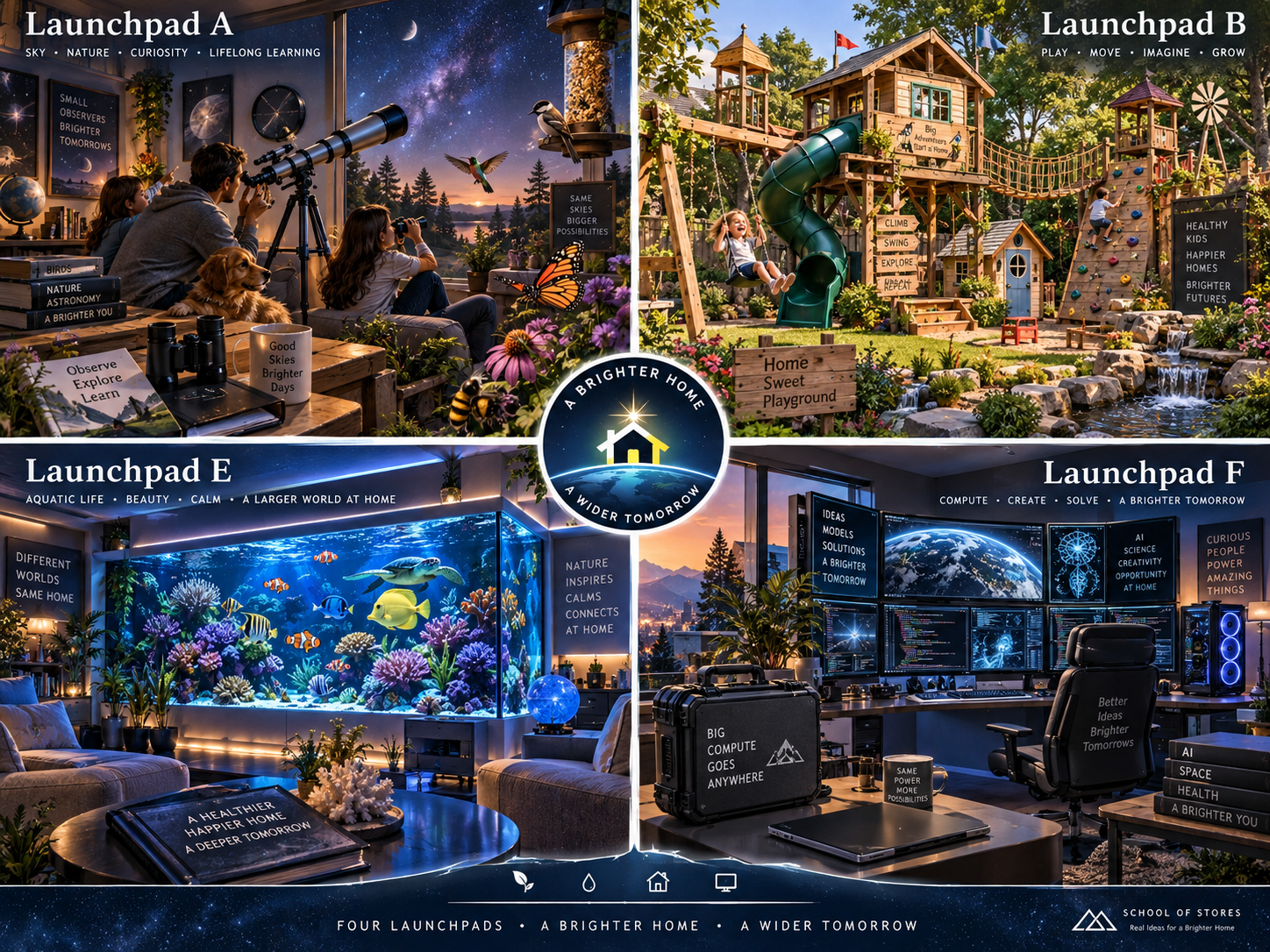
Playground Equipment Stores sell playground systems, components, surfacing, shade, site furnishings, replacement parts, and related products for homes, schools, parks, neighborhoods, multifamily properties, resorts, and other places where people play. For School Of Stores, the prototypical Playground Equipment Store is an online store supported by a catalog: customers can browse products and specifications, compare systems, plan a site, request quotes, arrange freight or installation, and continue into maintenance and replacement parts without needing a conventional showroom. Physical showrooms or demonstration yards are legitimate higher-touch variants, but they are not the default model. The category connects directly to Launchpad B because games and play can become designed physical environments at home and in communities, creating a smaller-scale pathway toward larger attractions.
ART GALLERY
The Latest Visuals
BLOG CATEGORY
Playground Equipment Stores
Blog entries associated with Playground Equipment Stores appear here automatically.
Launchpads For A Brighter Tomorrow
September 23, 2026
EMAIL OUTREACH
Reaching Out To Playground Equipment Stores
School Of Stores can reach out to online playground-equipment retailers, catalog sellers, independent dealers and distributors, manufacturers, manufacturer representatives, playground designers, landscape architects, installers, surfacing companies, Certified Playground Safety Inspectors, parks and recreation agencies, schools, HOAs, multifamily developers, accessibility specialists, parents, and community groups to verify how projects are researched, specified, quoted, funded, delivered, installed, inspected, maintained, and improved.
MORE INFORMATION
Number Of Playground Equipment Stores
There is no official U.S. count that cleanly matches the School Of Stores definition of Playground Equipment Stores. The broader 2022 Sporting Goods Retailers industry had 22,894 establishments, including 2,380 establishments in its electronic-shopping, mail-order, and TV-shopping bridge category, but that industry includes many businesses unrelated to playground equipment.[1]
MORE INFORMATION
Number Of Playground Equipment Stores
Footnotes
- U.S. Census Bureau. 2022 Economic Census — Industry Bridge Statistics, Sporting Goods Retailers. 2022 data; accessed September 23, 2026. Reports 22,894 U.S. establishments in NAICS 459110 Sporting Goods Retailers, including 2,380 establishments in the electronic shopping, mail-order, and TV-shopping sporting-goods bridge category.
MORE INFORMATION
Residential, Commercial & Public-Use Playground Equipment
Home playground equipment and public-use playground equipment are governed by different safety standards and should not be treated as interchangeable product categories. ASTM F1148-24 covers home playground equipment, while ASTM F1487-25 covers playground equipment for public use.[2][3]
MORE INFORMATION
Residential, Commercial & Public-Use Playground Equipment
Footnotes
- ASTM International. ASTM F1148-24 — Standard Consumer Safety Performance Specification for Home Playground Equipment. 2024 standard; accessed September 23, 2026. Defines the scope and safety requirements for home playground equipment and distinguishes it from public-use equipment.
- ASTM International. ASTM F1487-25 — Standard Consumer Safety Performance Specification for Playground Equipment for Public Use. 2025 standard; accessed September 23, 2026. Current public-use playground equipment safety and performance standard covering clearances, use zones, layout, and related requirements.
MORE INFORMATION
Safety, Accessibility & Installation
Safety and accessibility are core parts of the product, not optional add-ons. CPSC publishes a Public Playground Safety Handbook; the U.S. Access Board sets accessibility requirements for play areas; IPEMA certifies public play equipment and surfacing to specified standards; and NRPA operates the Certified Playground Safety Inspector program.[4][5][6][7]
MORE INFORMATION
Safety, Accessibility & Installation
Footnotes
- U.S. Consumer Product Safety Commission. Public Playground Safety Handbook. 2025 edition; accessed September 23, 2026. CPSC guidance for public playground equipment selection, installation, inspection, maintenance, and safer use.
- U.S. Access Board. ADA Accessibility Standards — Play Areas. Current standards; accessed September 23, 2026. Explains accessibility requirements for play areas, including accessible routes and ground-level/elevated play components.
- International Play Equipment Manufacturers Association. Certification Program. Accessed September 23, 2026. Lists current IPEMA third-party certification programs, including ASTM F1487-25 for public-use playground equipment and ASTM F1292-22 for playground surfacing impact attenuation.
- National Recreation and Park Association. Certified Playground Safety Inspector (CPSI). Accessed September 23, 2026. Describes NRPA's playground-safety certification covering hazard identification, equipment specifications, surfacing, inspection, maintenance, and risk management.
MORE INFORMATION
Trade Associations & Industry Events
IPEMA is a specialized trade association for the public playground industry, while the NRPA Annual Conference is a major adjacent marketplace where playground equipment, park products, software, and professional services are demonstrated to parks and recreation buyers.[8][9]
MORE INFORMATION
Trade Associations & Industry Events
Footnotes
- International Play Equipment Manufacturers Association. About IPEMA. Accessed September 23, 2026. Describes IPEMA's mission, membership, and role as a trade association and certification provider for the public playground industry.
- National Recreation and Park Association. 2026 NRPA Annual Conference — Why Exhibit. September 29–October 1, 2026; accessed September 23, 2026. Describes a 500+ vendor exhibit hall serving park and recreation professionals and featuring fully equipped playgrounds and related products.
MORE INFORMATION
Vendors & Supporting Services
The vendor ecosystem extends far beyond complete play structures. It includes equipment manufacturers, surfacing suppliers, shade and site-furnishing companies, component makers, freight carriers, site contractors, installers, designers, inspectors, software providers, insurers, financing providers, and replacement-parts suppliers.[10][7]
MORE INFORMATION
Vendors & Supporting Services
Footnotes
- International Play Equipment Manufacturers Association. Manufacturers Directory. Accessed September 23, 2026. Directory illustrating the range of playground equipment and surfacing manufacturers in the public-playground supply ecosystem.
- National Recreation and Park Association. Certified Playground Safety Inspector (CPSI). Accessed September 23, 2026. Describes NRPA's playground-safety certification covering hazard identification, equipment specifications, surfacing, inspection, maintenance, and risk management.
MORE INFORMATION
Starting A Playground Equipment Store
A startup does not need a showroom. The School Of Stores prototype begins with an online storefront and catalog, a clearly defined residential or commercial product scope, strong supplier relationships, project quoting, freight and installation coordination, and reliable safety and product documentation.[2][3][4]
MORE INFORMATION
Starting A Playground Equipment Store
Footnotes
- ASTM International. ASTM F1148-24 — Standard Consumer Safety Performance Specification for Home Playground Equipment. 2024 standard; accessed September 23, 2026. Defines the scope and safety requirements for home playground equipment and distinguishes it from public-use equipment.
- ASTM International. ASTM F1487-25 — Standard Consumer Safety Performance Specification for Playground Equipment for Public Use. 2025 standard; accessed September 23, 2026. Current public-use playground equipment safety and performance standard covering clearances, use zones, layout, and related requirements.
- U.S. Consumer Product Safety Commission. Public Playground Safety Handbook. 2025 edition; accessed September 23, 2026. CPSC guidance for public playground equipment selection, installation, inspection, maintenance, and safer use.
- U.S. Access Board. ADA Accessibility Standards — Play Areas. Current standards; accessed September 23, 2026. Explains accessibility requirements for play areas, including accessible routes and ground-level/elevated play components.
MORE INFORMATION
Websites & Apps For Playground Equipment Stores
The website can be the primary store. Product search, downloadable catalogs, CAD and 3D assets, quote requests, site-planning tools, color selection, accessibility information, freight and installation options, and project records can turn a complex purchase into a guided online process.[11][12][17]
MORE INFORMATION
Websites & Apps For Playground Equipment Stores
Footnotes
- Playworld. Playground Design Tools — CAD / 3D Assets. Accessed September 23, 2026. Provides downloadable product and CAD assets for architects, landscape architects, engineers, contractors, and other design professionals.
- GameTime. Custom Playgrounds by Landmark Design. Accessed September 23, 2026. Documents a custom-play process using stakeholder input, sketches, drawings, samples, renderings, animations, contractors, and certified installers.
- GameTime. GameTime Factory Store. Accessed September 23, 2026. Current example of an online playground-equipment sales environment with quote workflows, color tools, quick-ship systems, and catalog access elsewhere on the site.
MORE INFORMATION
Rewards & Equity Crowdfunds For Playground Equipment Stores
Rewards crowdfunding can help test a new play product, accessory, themed component, community playground package, or demonstration project. Equity crowdfunding is different because it involves securities; Regulation Crowdfunding currently permits eligible companies to raise up to $5 million in a 12-month period through an SEC-registered intermediary, subject to the rule's requirements.[13]
MORE INFORMATION
Rewards & Equity Crowdfunds For Playground Equipment Stores
Footnotes
- U.S. Securities and Exchange Commission. Regulation Crowdfunding. Last reviewed April 24, 2025; accessed September 23, 2026. Current SEC overview of Regulation Crowdfunding, including the $5 million 12-month issuer limit and registered-intermediary requirement.
MORE INFORMATION
Supply Chain Opportunities
The supply chain runs from raw materials and components through equipment manufacturing, surfacing, shade and site furnishings, catalogs and software, freight, site preparation, installation, inspection, maintenance, and replacement parts. Each stage can support specialized businesses.[10][11]
MORE INFORMATION
Supply Chain Opportunities
Footnotes
- International Play Equipment Manufacturers Association. Manufacturers Directory. Accessed September 23, 2026. Directory illustrating the range of playground equipment and surfacing manufacturers in the public-playground supply ecosystem.
- Playworld. Playground Design Tools — CAD / 3D Assets. Accessed September 23, 2026. Provides downloadable product and CAD assets for architects, landscape architects, engineers, contractors, and other design professionals.
MORE INFORMATION
Opportunities For Improvement
The strongest opportunity is to make a complicated project easier to understand and buy online: clearer use-environment distinctions, better catalogs, transparent project stages, site-planning and visualization tools, accessibility guidance, complete installed-project quotes, community group purchasing, replacement-parts systems, and long-term maintenance support.[5][11][12]
MORE INFORMATION
Opportunities For Improvement
Footnotes
- Playworld. Playground Design Tools — CAD / 3D Assets. Accessed September 23, 2026. Provides downloadable product and CAD assets for architects, landscape architects, engineers, contractors, and other design professionals.
- GameTime. Custom Playgrounds by Landmark Design. Accessed September 23, 2026. Documents a custom-play process using stakeholder input, sketches, drawings, samples, renderings, animations, contractors, and certified installers.
MORE INFORMATION
History Of Playground Equipment Stores
Playground Equipment Stores emerged from the broader history of planned playgrounds, commercial play-equipment manufacturing, catalogs, dealers, representatives, and later online project-sales systems. The U.S. playground movement expanded rapidly in the early twentieth century, and a 1908 manual titled First Steps in Organizing Playgrounds shows how quickly playground planning was becoming formalized.[14][15]
MORE INFORMATION
History Of Playground Equipment Stores
Footnotes
- Library of Congress. How the Playground Movement Made a Case for Play. May 22, 2018. Describes the early-twentieth-century U.S. playground movement and the shift from uncommon planned play spaces to widespread municipal playgrounds.
- Library of Congress. First Steps in Organizing Playgrounds. 1908. Digitized 1908 manual by Lee F. Hanmer documenting early organized playground planning.
- GameTime. About GameTime — History and Heritage of Play Since 1929. Accessed September 23, 2026. Company history tracing commercial playground manufacturing from its 1929 founding through later custom and inclusive play systems.
- Playworld. Playground Design Tools — CAD / 3D Assets. Accessed September 23, 2026. Provides downloadable product and CAD assets for architects, landscape architects, engineers, contractors, and other design professionals.
- GameTime. GameTime Factory Store. Accessed September 23, 2026. Current example of an online playground-equipment sales environment with quote workflows, color tools, quick-ship systems, and catalog access elsewhere on the site.
ART ARCHIVE
Visual Records
FOOTNOTES
Sources
- U.S. Census Bureau. 2022 Economic Census — Industry Bridge Statistics, Sporting Goods Retailers. 2022 data; accessed September 23, 2026. Reports 22,894 U.S. establishments in NAICS 459110 Sporting Goods Retailers, including 2,380 establishments in the electronic shopping, mail-order, and TV-shopping sporting-goods bridge category.
- ASTM International. ASTM F1148-24 — Standard Consumer Safety Performance Specification for Home Playground Equipment. 2024 standard; accessed September 23, 2026. Defines the scope and safety requirements for home playground equipment and distinguishes it from public-use equipment.
- ASTM International. ASTM F1487-25 — Standard Consumer Safety Performance Specification for Playground Equipment for Public Use. 2025 standard; accessed September 23, 2026. Current public-use playground equipment safety and performance standard covering clearances, use zones, layout, and related requirements.
- U.S. Consumer Product Safety Commission. Public Playground Safety Handbook. 2025 edition; accessed September 23, 2026. CPSC guidance for public playground equipment selection, installation, inspection, maintenance, and safer use.
- U.S. Access Board. ADA Accessibility Standards — Play Areas. Current standards; accessed September 23, 2026. Explains accessibility requirements for play areas, including accessible routes and ground-level/elevated play components.
- International Play Equipment Manufacturers Association. Certification Program. Accessed September 23, 2026. Lists current IPEMA third-party certification programs, including ASTM F1487-25 for public-use playground equipment and ASTM F1292-22 for playground surfacing impact attenuation.
- National Recreation and Park Association. Certified Playground Safety Inspector (CPSI). Accessed September 23, 2026. Describes NRPA's playground-safety certification covering hazard identification, equipment specifications, surfacing, inspection, maintenance, and risk management.
- International Play Equipment Manufacturers Association. About IPEMA. Accessed September 23, 2026. Describes IPEMA's mission, membership, and role as a trade association and certification provider for the public playground industry.
- National Recreation and Park Association. 2026 NRPA Annual Conference — Why Exhibit. September 29–October 1, 2026; accessed September 23, 2026. Describes a 500+ vendor exhibit hall serving park and recreation professionals and featuring fully equipped playgrounds and related products.
- International Play Equipment Manufacturers Association. Manufacturers Directory. Accessed September 23, 2026. Directory illustrating the range of playground equipment and surfacing manufacturers in the public-playground supply ecosystem.
- Playworld. Playground Design Tools — CAD / 3D Assets. Accessed September 23, 2026. Provides downloadable product and CAD assets for architects, landscape architects, engineers, contractors, and other design professionals.
- GameTime. Custom Playgrounds by Landmark Design. Accessed September 23, 2026. Documents a custom-play process using stakeholder input, sketches, drawings, samples, renderings, animations, contractors, and certified installers.
- U.S. Securities and Exchange Commission. Regulation Crowdfunding. Last reviewed April 24, 2025; accessed September 23, 2026. Current SEC overview of Regulation Crowdfunding, including the $5 million 12-month issuer limit and registered-intermediary requirement.
- Library of Congress. How the Playground Movement Made a Case for Play. May 22, 2018. Describes the early-twentieth-century U.S. playground movement and the shift from uncommon planned play spaces to widespread municipal playgrounds.
- Library of Congress. First Steps in Organizing Playgrounds. 1908. Digitized 1908 manual by Lee F. Hanmer documenting early organized playground planning.
- GameTime. About GameTime — History and Heritage of Play Since 1929. Accessed September 23, 2026. Company history tracing commercial playground manufacturing from its 1929 founding through later custom and inclusive play systems.
- GameTime. GameTime Factory Store. Accessed September 23, 2026. Current example of an online playground-equipment sales environment with quote workflows, color tools, quick-ship systems, and catalog access elsewhere on the site.