ABOUT
Information
Home & Garden Centers are retail businesses focused on the home and the spaces around it. They may sell products for home improvement, repair, maintenance, gardening, landscaping, outdoor living, tools, plants, building projects, seasonal projects, and related household needs. Some are large multi-department stores, while others specialize in only part of the home-and-garden ecosystem. School Of Stores treats Home & Garden Centers as a broad parent Kind Of Store that can later contain more-specific store types with their own structured records, pages, research, and nested Current categories.
ART GALLERY
The Latest Visuals
BLOG CATEGORY
Home & Garden Centers
Blog entries associated with Home & Garden Centers appear here automatically.
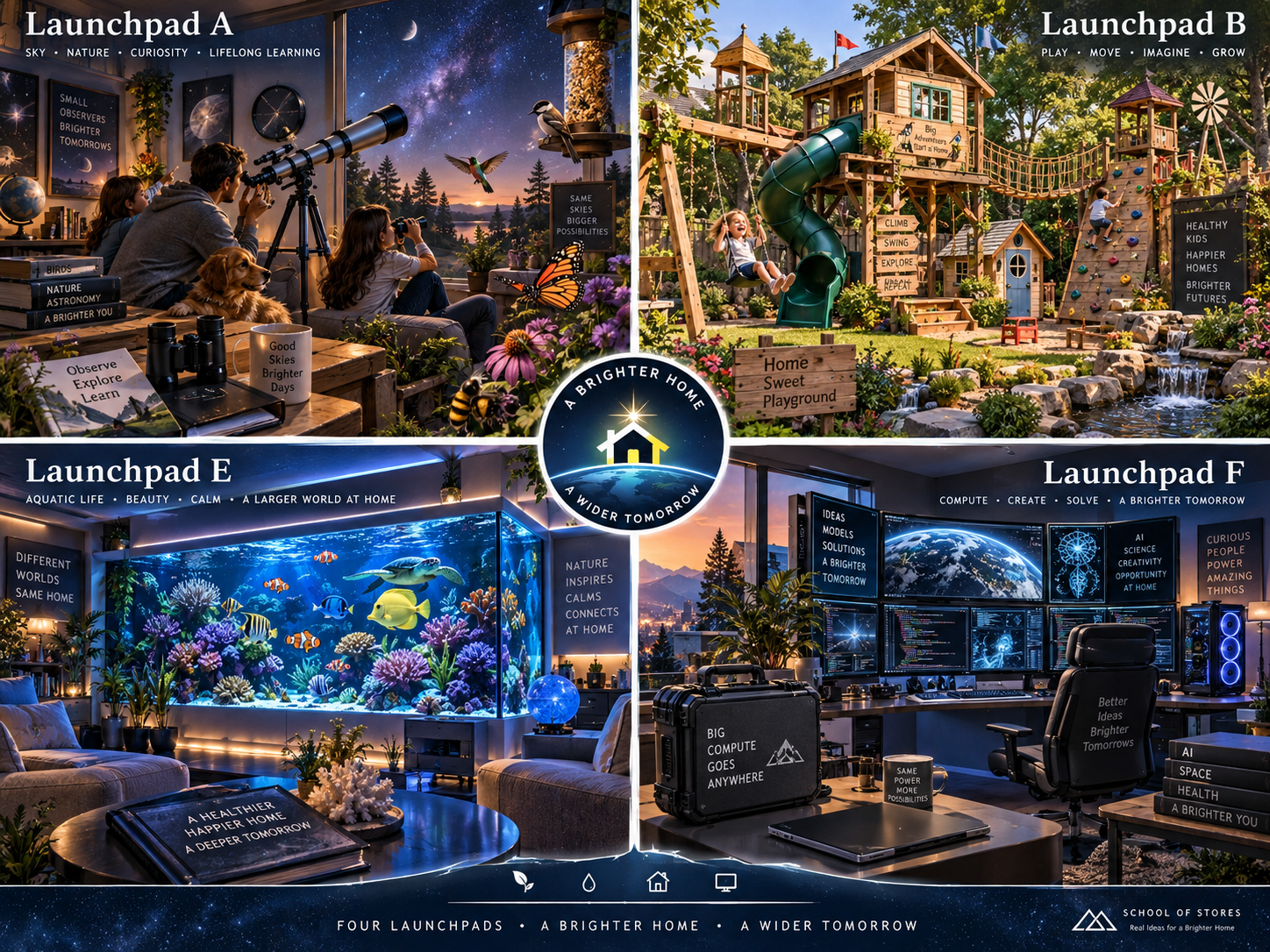
Launchpads For A Brighter Tomorrow
September 23, 2026
EMAIL OUTREACH
Reaching Out To Home & Garden Centers
School Of Stores can reach out to home centers, independent home-improvement retailers, garden centers, nurseries, horticulture businesses, manufacturers, distributors, service companies, trade groups, designers, installers, and other suppliers to verify research, learn recurring operating needs, and identify practical ways people could start, supply, service, or improve Home & Garden Centers.
MORE INFORMATION
Number Of Home & Garden Centers
There is no single official count for the broad School Of Stores phrase “Home & Garden Centers.” Useful 2023 Census benchmarks include 5,834 employer establishments classified specifically as Home Centers and 13,195 in Nursery, Garden Center, and Farm Supply Retailers; the latter category also includes farm-supply businesses.[1][2]
MORE INFORMATION
Number Of Home & Garden Centers
Footnotes
- U.S. Census Bureau. 2023 County Business Patterns — Home Centers (NAICS 444110). 2023 reference year; accessed September 18, 2026. The Census Bureau profile reports 5,834 U.S. employer establishments in NAICS 444110, Home Centers, for 2023. This is one defined segment within the broader School Of Stores Home & Garden Centers concept.
- U.S. Census Bureau. 2023 County Business Patterns — Nursery, Garden Center, and Farm Supply Retailers (NAICS 444220). 2023 reference year; accessed September 18, 2026. The Census Bureau profile reports 13,195 U.S. employer establishments in NAICS 444220 for 2023. The category includes farm-supply retailers as well as nursery and garden-center retailers, so it is not a clean count of garden centers alone.
- U.S. Census Bureau. Building Material and Garden Equipment and Supplies Dealers (NAICS 444). 2023 County Business Patterns; accessed September 18, 2026. The broader NAICS 444 subsector reports 72,618 U.S. employer establishments in 2023 and includes home centers, hardware, paint, building-material, outdoor-power-equipment, nursery, garden-center, and farm-supply retailers.
MORE INFORMATION
Trade Associations & Industry Events
The category spans at least two strong industry networks: independent home improvement through NHPA, and horticulture/garden retail through AmericanHort. HIRI supplies adjacent home-improvement market research, while AmericanHort’s Cultivate connects garden retailers with growers, suppliers, distributors, designers, landscapers, educators, researchers, and manufacturers.[4][5][6][7]
MORE INFORMATION
Trade Associations & Industry Events
Footnotes
- North American Hardware and Paint Association. Who We Are / NHPA. Accessed September 18, 2026. NHPA describes itself as a nonprofit trade association serving independent hardware, paint and decorating, and home-improvement retailers and providing training, research, networking, and other business resources.
- Home Improvement Research Institute. About HIRI. Accessed September 18, 2026. HIRI is a nonprofit research cooperative focused on the home-improvement industry, serving manufacturers, retailers, and supporting companies with market, consumer, project, product, and channel research.
- AmericanHort. About AmericanHort. Accessed September 18, 2026. AmericanHort describes itself as the national horticultural association, bringing together growers, retailers, distributors, landscape firms, suppliers, and other segments of the green industry.
- AmericanHort. Cultivate — The Premiere Green Industry Event. Accessed September 18, 2026. Cultivate brings together growers, retailers, breeders, suppliers, distributors, designers, landscapers, educators, researchers, and manufacturers around horticulture business, technology, education, and networking.
MORE INFORMATION
Vendors & Supporting Services
Home & Garden Centers depend on a wide support network: manufacturers and distributors; nurseries and growers; freight and local delivery; fixtures and shelving; POS, inventory, e-commerce, and loyalty systems; equipment service; plant care; design and installation partners; marketing; training; accounting; insurance; and other professional services.[4][5][7]
MORE INFORMATION
Vendors & Supporting Services
Footnotes
- North American Hardware and Paint Association. Who We Are / NHPA. Accessed September 18, 2026. NHPA describes itself as a nonprofit trade association serving independent hardware, paint and decorating, and home-improvement retailers and providing training, research, networking, and other business resources.
- AmericanHort. About AmericanHort. Accessed September 18, 2026. AmericanHort describes itself as the national horticultural association, bringing together growers, retailers, distributors, landscape firms, suppliers, and other segments of the green industry.
- Home Improvement Research Institute. About HIRI. Accessed September 18, 2026. HIRI is a nonprofit research cooperative focused on the home-improvement industry, serving manufacturers, retailers, and supporting companies with market, consumer, project, product, and channel research.
MORE INFORMATION
Starting A Home & Garden Center
The first decision is scope: a founder can start with a narrow specialty rather than attempting a full warehouse-style home center. Planning should account for target customers, merchandise mix, suppliers, inventory, space, indoor/outdoor display, seasonality, staffing, delivery, permits, insurance, systems, and working capital.[8][9]
MORE INFORMATION
Starting A Home & Garden Center
Footnotes
- U.S. Small Business Administration. Plan Your Business / Calculate Startup Costs. Accessed September 18, 2026. SBA startup guidance identifies costs such as space, equipment, utilities, licenses and permits, insurance, inventory, wages, marketing, market research, and websites.
- U.S. Small Business Administration. Launch Your Business. Accessed September 18, 2026. SBA launch guidance covers location, zoning, business structure, registration, tax IDs, licenses and permits, banking, and insurance; requirements vary by activity and jurisdiction.
MORE INFORMATION
Websites & Apps For Home & Garden Centers
Home & Garden Center websites and apps can make a complex seasonal inventory easier to navigate with live stock, ecommerce, pickup/delivery, customer profiles, loyalty, care information, and mobile selling across a large nursery. Lightspeed's garden-center platform combines inventory, ecommerce, customer management, forecasting, and mobile POS.[12]
MORE INFORMATION
Websites & Apps For Home & Garden Centers
Footnotes
- Lightspeed. Garden center POS system. Accessed September 22, 2026. Current garden-center technology example covering specialized inventory, forecasting, ecommerce, loyalty, delivery/pickup, and mobile POS.
MORE INFORMATION
Rewards & Equity Crowdfunds For Home & Garden Centers
Reward-based crowdfunding can test support for a teaching greenhouse, native-plant demonstration area, community garden classroom, delivery capability, or a defined local growing project, while an equity crowdfunding offering would involve selling securities rather than perks.[13][14]
MORE INFORMATION
Rewards & Equity Crowdfunds For Home & Garden Centers
Footnotes
- Kickstarter. How Crowdfunding Works: A Guide for Creators. September 2026. General reference for reward-based crowdfunding: backers can receive rewards, while Kickstarter does not provide equity or ownership to backers.
- U.S. Securities and Exchange Commission. Regulation Crowdfunding. Accessed September 22, 2026. Current federal overview: eligible issuers may raise up to $5 million in a 12-month period through an SEC-registered broker-dealer or funding portal, subject to disclosure and other requirements.
MORE INFORMATION
Supply Chain Opportunities
People can participate in this ecosystem without opening a store. Opportunities extend through growing and propagation, product manufacturing, wholesale and distribution, logistics, delivery, equipment repair, software, merchandising, design, installation, contractor services, education, content, seasonal labor, and specialist consulting.[4][5][6][7]
MORE INFORMATION
Supply Chain Opportunities
Footnotes
- North American Hardware and Paint Association. Who We Are / NHPA. Accessed September 18, 2026. NHPA describes itself as a nonprofit trade association serving independent hardware, paint and decorating, and home-improvement retailers and providing training, research, networking, and other business resources.
- AmericanHort. About AmericanHort. Accessed September 18, 2026. AmericanHort describes itself as the national horticultural association, bringing together growers, retailers, distributors, landscape firms, suppliers, and other segments of the green industry.
- AmericanHort. Cultivate — The Premiere Green Industry Event. Accessed September 18, 2026. Cultivate brings together growers, retailers, breeders, suppliers, distributors, designers, landscapers, educators, researchers, and manufacturers around horticulture business, technology, education, and networking.
- Home Improvement Research Institute. About HIRI. Accessed September 18, 2026. HIRI is a nonprofit research cooperative focused on the home-improvement industry, serving manufacturers, retailers, and supporting companies with market, consumer, project, product, and channel research.
MORE INFORMATION
Opportunities For Improvement
Potential improvements include clearer project guidance, better staff expertise, accurate local inventory, easier pickup and delivery, stronger plant-care information, accessible layouts, seasonal planning, product comparison, repair and rental services, contractor connections, workshops, demonstrations, and smoother links between physical stores, online research, and real-world projects.[4][5][7]
MORE INFORMATION
Opportunities For Improvement
Footnotes
- North American Hardware and Paint Association. Who We Are / NHPA. Accessed September 18, 2026. NHPA describes itself as a nonprofit trade association serving independent hardware, paint and decorating, and home-improvement retailers and providing training, research, networking, and other business resources.
- AmericanHort. About AmericanHort. Accessed September 18, 2026. AmericanHort describes itself as the national horticultural association, bringing together growers, retailers, distributors, landscape firms, suppliers, and other segments of the green industry.
- Home Improvement Research Institute. About HIRI. Accessed September 18, 2026. HIRI is a nonprofit research cooperative focused on the home-improvement industry, serving manufacturers, retailers, and supporting companies with market, consumer, project, product, and channel research.
MORE INFORMATION
History Of Home & Garden Centers
The modern category combines histories that developed along different paths: home-improvement retail grew with twentieth-century homeownership and do-it-yourself culture, while the organized U.S. nursery and horticulture trade has roots reaching into the nineteenth century. School Of Stores joins those related histories under one broad parent concept while leaving room for more-specific child records.[10][11]
MORE INFORMATION
History Of Home & Garden Centers
Footnotes
- Smithsonian Libraries and Archives. Building a Market: The Rise of the Home Improvement Industry, 1914–1960. Book published 2012; catalog record accessed September 18, 2026. The Smithsonian catalog summary describes the rise of the North American home-improvement industry from the end of World War I through the 1950s, including the birth of the home-improvement store and the growth of do-it-yourself culture.
- AmericanHort. About AmericanHort — A Horticultural Legacy. Accessed September 18, 2026. AmericanHort traces one branch of its organizational heritage to the American Association of Nurserymen, Florists and Seedsmen founded in 1876, providing useful context for the long commercial history of the U.S. nursery and garden industry.
ART ARCHIVE
Visual Records

FOOTNOTES
Sources
- U.S. Census Bureau. 2023 County Business Patterns — Home Centers (NAICS 444110). 2023 reference year; accessed September 18, 2026. The Census Bureau profile reports 5,834 U.S. employer establishments in NAICS 444110, Home Centers, for 2023. This is one defined segment within the broader School Of Stores Home & Garden Centers concept.
- U.S. Census Bureau. 2023 County Business Patterns — Nursery, Garden Center, and Farm Supply Retailers (NAICS 444220). 2023 reference year; accessed September 18, 2026. The Census Bureau profile reports 13,195 U.S. employer establishments in NAICS 444220 for 2023. The category includes farm-supply retailers as well as nursery and garden-center retailers, so it is not a clean count of garden centers alone.
- U.S. Census Bureau. Building Material and Garden Equipment and Supplies Dealers (NAICS 444). 2023 County Business Patterns; accessed September 18, 2026. The broader NAICS 444 subsector reports 72,618 U.S. employer establishments in 2023 and includes home centers, hardware, paint, building-material, outdoor-power-equipment, nursery, garden-center, and farm-supply retailers.
- North American Hardware and Paint Association. Who We Are / NHPA. Accessed September 18, 2026. NHPA describes itself as a nonprofit trade association serving independent hardware, paint and decorating, and home-improvement retailers and providing training, research, networking, and other business resources.
- AmericanHort. About AmericanHort. Accessed September 18, 2026. AmericanHort describes itself as the national horticultural association, bringing together growers, retailers, distributors, landscape firms, suppliers, and other segments of the green industry.
- AmericanHort. Cultivate — The Premiere Green Industry Event. Accessed September 18, 2026. Cultivate brings together growers, retailers, breeders, suppliers, distributors, designers, landscapers, educators, researchers, and manufacturers around horticulture business, technology, education, and networking.
- Home Improvement Research Institute. About HIRI. Accessed September 18, 2026. HIRI is a nonprofit research cooperative focused on the home-improvement industry, serving manufacturers, retailers, and supporting companies with market, consumer, project, product, and channel research.
- U.S. Small Business Administration. Plan Your Business / Calculate Startup Costs. Accessed September 18, 2026. SBA startup guidance identifies costs such as space, equipment, utilities, licenses and permits, insurance, inventory, wages, marketing, market research, and websites.
- U.S. Small Business Administration. Launch Your Business. Accessed September 18, 2026. SBA launch guidance covers location, zoning, business structure, registration, tax IDs, licenses and permits, banking, and insurance; requirements vary by activity and jurisdiction.
- Smithsonian Libraries and Archives. Building a Market: The Rise of the Home Improvement Industry, 1914–1960. Book published 2012; catalog record accessed September 18, 2026. The Smithsonian catalog summary describes the rise of the North American home-improvement industry from the end of World War I through the 1950s, including the birth of the home-improvement store and the growth of do-it-yourself culture.
- AmericanHort. About AmericanHort — A Horticultural Legacy. Accessed September 18, 2026. AmericanHort traces one branch of its organizational heritage to the American Association of Nurserymen, Florists and Seedsmen founded in 1876, providing useful context for the long commercial history of the U.S. nursery and garden industry.
- Lightspeed. Garden center POS system. Accessed September 22, 2026. Current garden-center technology example covering specialized inventory, forecasting, ecommerce, loyalty, delivery/pickup, and mobile POS.
- Kickstarter. How Crowdfunding Works: A Guide for Creators. September 2026. General reference for reward-based crowdfunding: backers can receive rewards, while Kickstarter does not provide equity or ownership to backers.
- U.S. Securities and Exchange Commission. Regulation Crowdfunding. Accessed September 22, 2026. Current federal overview: eligible issuers may raise up to $5 million in a 12-month period through an SEC-registered broker-dealer or funding portal, subject to disclosure and other requirements.